
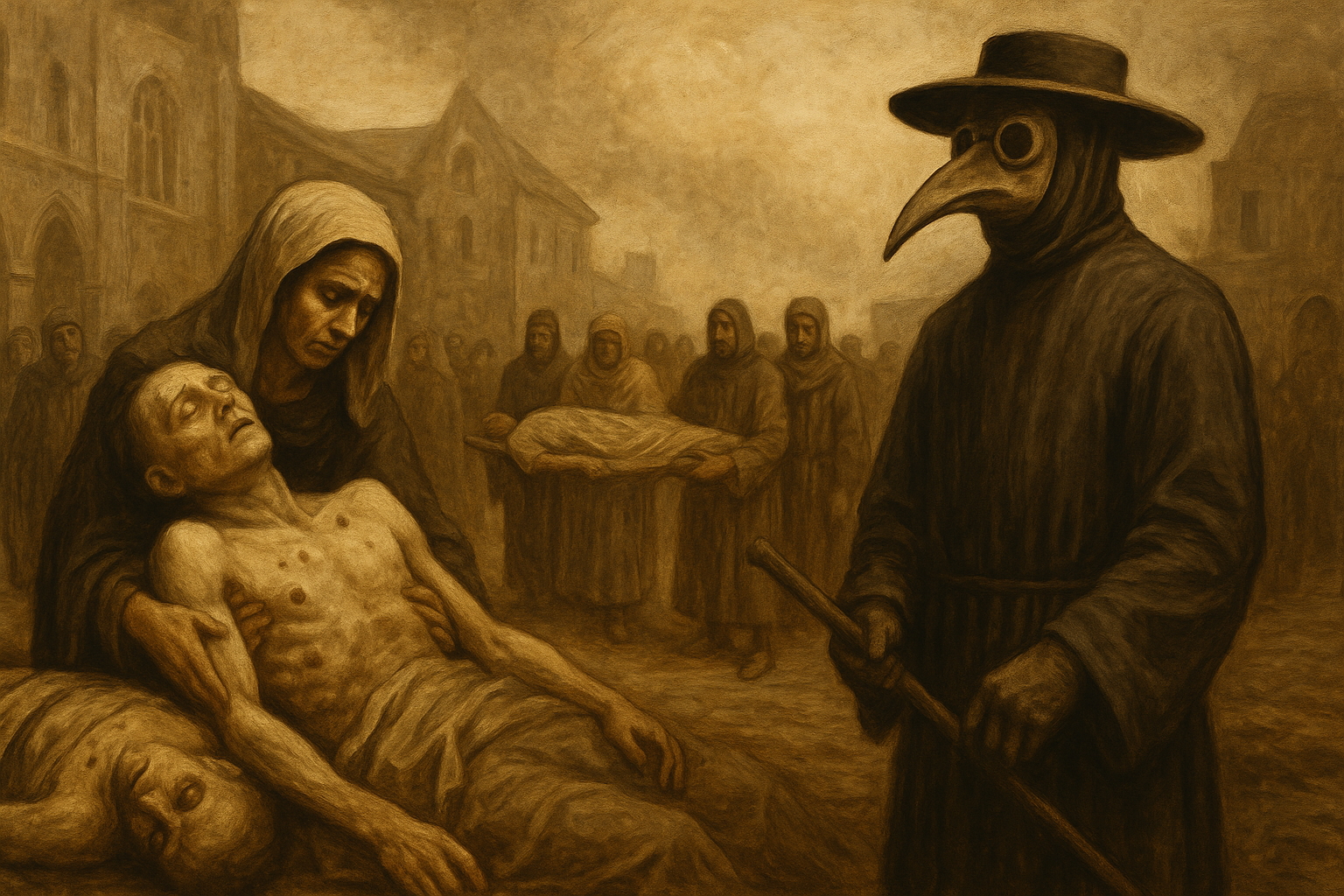
Few events in history evoke as much mystery and intrigue as the Black Death. Sweeping through Europe in the mid-14th century, this devastating pandemic forever altered the course of human history. Today, misconceptions still abound. Let’s dive into the historical truth, separating fact from fiction.
Life Before the Plague
Europe before the Black Death was characterized by burgeoning populations, prosperous trade routes, and thriving medieval towns. Society was structured, with feudal systems ensuring a clear social hierarchy. Hygiene practices, however, were poor, with overcrowded urban centers and limited medical knowledge setting the stage for disaster.
Missed Signs and Early Warnings
Early signs of the approaching catastrophe were largely ignored or misunderstood:
- Unusual Rodent Behavior: Reports of increased rat populations in urban centers were dismissed as minor annoyances rather than disease indicators.
- Trade Ships as Carriers: The rapid spread of plague coincided with merchant ships docking from distant lands, but connections to trade routes as conduits for disease were not immediately recognized.
Origins and Causes
The Black Death, primarily caused by the bacterium Yersinia pestis, spread predominantly through fleas that infested rats. These fleas then transmitted the plague to humans. While initially thought to originate solely in Asia, recent evidence suggests multiple entry points and variations of the plague circulating simultaneously.
Myths vs. Reality
Several myths emerged around the plague:
- Myth: The plague was a divine punishment.
- Reality: The disease was biologically transmitted by fleas and rats, unrelated to moral or religious failings.
- Myth: Doctors wearing masks filled with herbs could protect themselves.
- Reality: The iconic “plague doctor” masks were largely ineffective against infection, as they didn’t address the flea vectors.
Life During the Black Death
Life amid the plague was marked by fear, isolation, and uncertainty. Approximately one-third of Europe’s population perished. Social structures collapsed, families were torn apart, and economic disruption was extensive. The sheer mortality rate led to widespread labor shortages, dramatically shifting societal roles and economic practices.
Responses and Remedies
Various ineffective remedies were attempted:
- Burning aromatic herbs
- Bloodletting and other medieval medical practices
- Religious processions and public prayers
Eventually, quarantining of affected individuals and areas provided some limited relief, though not fully understood at the time.
Emergence from the Plague
Recovery from the Black Death was gradual and uneven. By the late 14th century, populations slowly stabilized. Economic and social restructuring led to significant changes:
- Increased wages due to labor shortages
- Weakening of feudalism as peasants gained more rights
- Greater emphasis on public health and sanitation
Lessons Learned
The Black Death taught humanity critical lessons still relevant today:
- Importance of Hygiene: Sanitation became recognized as vital for preventing disease.
- Medical Progress: The inadequacy of medieval medicine spurred advances in medical understanding and practice.
- Social Resilience: Societies adapted remarkably well after immense upheaval, demonstrating resilience and adaptability.
By revisiting and dispelling the myths surrounding the Black Death, we appreciate the enduring lessons about human resilience, medical advancement, and societal evolution.