
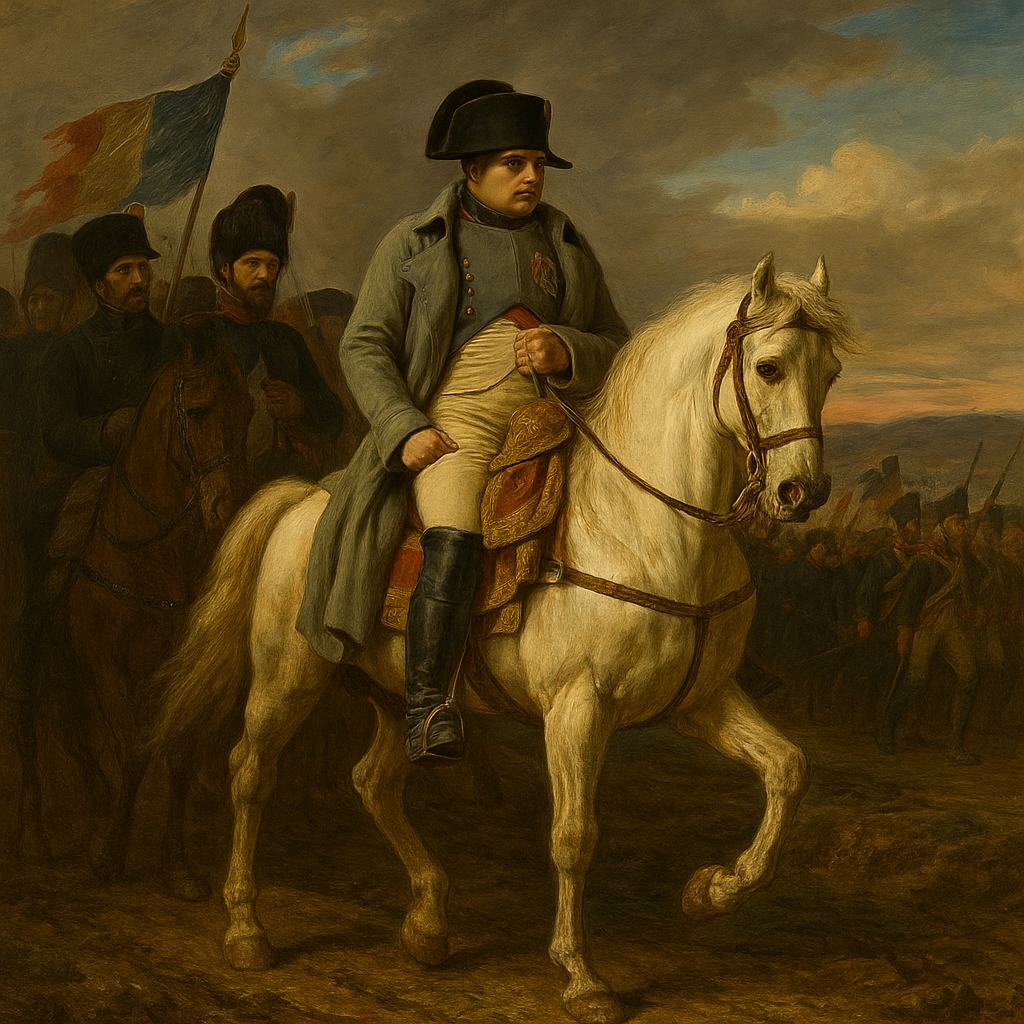
In the early months of 1815, Europe rested uneasily. The wars that had rocked the continent for over a decade had subsided, and Napoleon Bonaparte, once Emperor of the French and master of Europe, had been exiled to the tiny Mediterranean island of Elba. It seemed the Napoleonic era had ended. But the world underestimated one man’s ambition and resilience.
What followed was one of the boldest and most unexpected returns in history — a story of risk, defiance, and unmatched charisma that would shake the foundations of European power once more.
Exile on Elba
After his abdication in April 1814, Napoleon was sent to Elba, a small island off the coast of Italy. He was allowed to retain the title of Emperor and was given sovereignty over the island. Though only 12 kilometers long, Napoleon governed Elba with reformist zeal. He reorganized the military, introduced agricultural innovations, improved the island’s infrastructure, and even created a small navy.
But the “Emperor of Elba” was restless. Reports from France told of political instability, growing discontent with King Louis XVIII, and fears of a return to pre-revolutionary conditions. Napoleon saw an opportunity.
The Escape
On February 26, 1815, Napoleon slipped past British surveillance with a fleet of seven ships and about 1,000 men. It was a desperate gamble. If he was captured, he would surely be executed. But if he could rally France once more, he might yet reclaim his throne.
He landed near Cannes on March 1, unopposed. From there, he began his legendary march north toward Paris.
The Flight of the Eagle
Napoleon’s advance was more than a military campaign; it was a theatrical tour de force. As he moved through the countryside, he met resistance not with weapons, but with words. When royal troops were dispatched to arrest him, he faced them alone.
“Here I am. Kill your Emperor if you wish.”
The soldiers, many of whom had once served under him, threw down their weapons and joined his cause.
Each step brought more supporters. Towns opened their gates. Officers rejoined him. The people cheered. The King fled Paris.
In just three weeks, Napoleon had retaken the French capital without firing a single shot.
The Hundred Days Begin
Napoleon’s return, now known as the “Hundred Days,” was both triumphant and doomed. European powers, alarmed by his reappearance, formed the Seventh Coalition. They vowed to end his reign once and for all.
Napoleon acted swiftly, reforming his army and preparing for war. But this time, Europe was united against him. The climax came at Waterloo on June 18, 1815 — a bloody battle that sealed his fate.
Legacy of the Escape
Though his final reign was short-lived, Napoleon’s escape from Elba remains one of the most remarkable episodes in modern history. It was a masterclass in leadership, symbolism, and sheer nerve.
The world had tried to forget Napoleon. But for one hundred days, he reminded them all that legends don’t die quietly.